
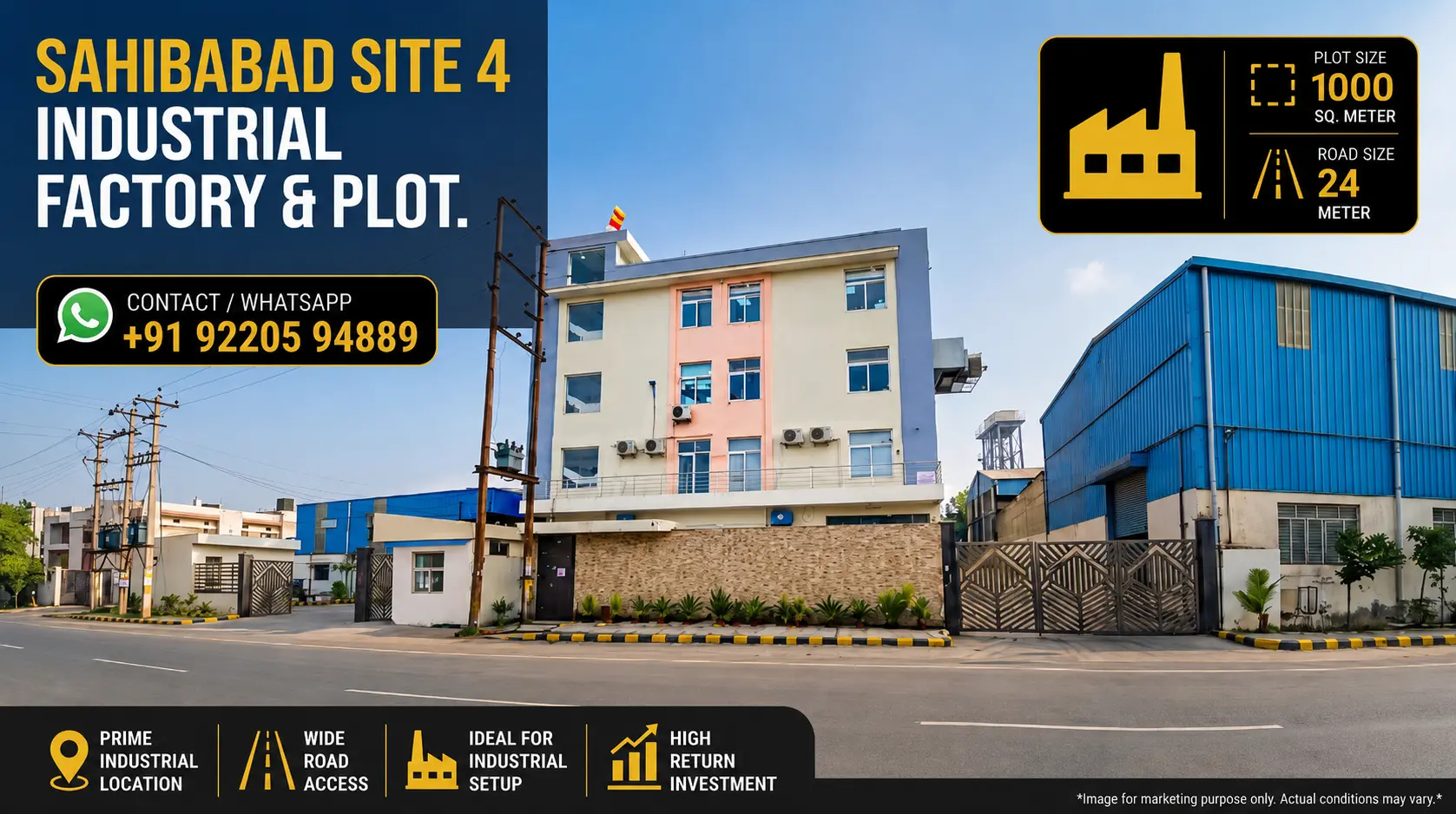
If you are acquiring a premium plot in Sahibabad to build a heavy manufacturing facility, traditional construction methods are no longer structurally or legally viable. The industrial framework has fundamentally changed.
Ground Reality: VaEdifice Industrial Walkthrough in Sahibabad Site 4
Sahibabad Site 4 is currently undergoing a massive modernization facelift. Driven by the Namo Bharat (RRTS) transit corridor and the Delhi Metro integration, property valuations are experiencing aggressive compounding. However, executing a massive industrial build in this dense, highly valuable micro-market requires absolute engineering precision. You cannot simply dig a hole and stack bricks. From extreme machinery vibrations to the complexities of deep basement excavation next to older structures, building here requires a fiduciary-grade construction partner.
As one of the most authoritative construction companies in Sahibabad, having successfully engineered and delivered over 28 heavy industrial factories in this specific region, VaEdifice relies exclusively on hard structural telemetry. Skip the middleman fluff. This is the ultimate 2026 fiduciary guide to developing high-yield factories and acquiring premium plots in Site 4.
1. Market Telemetry: The Sahibabad Site 4 Ecosystem
Before pouring concrete, investors must understand the macroeconomic value of the land they are acquiring. Sahibabad Industrial Area Site 4 is a massive 670-acre industrial hub strategically positioned right on the Delhi-UP border. Managed by the Uttar Pradesh State Industrial Development Authority (UPSIDA), this estate is not an emerging market—it is a highly mature ecosystem hosting over 2,500 active industrial units.
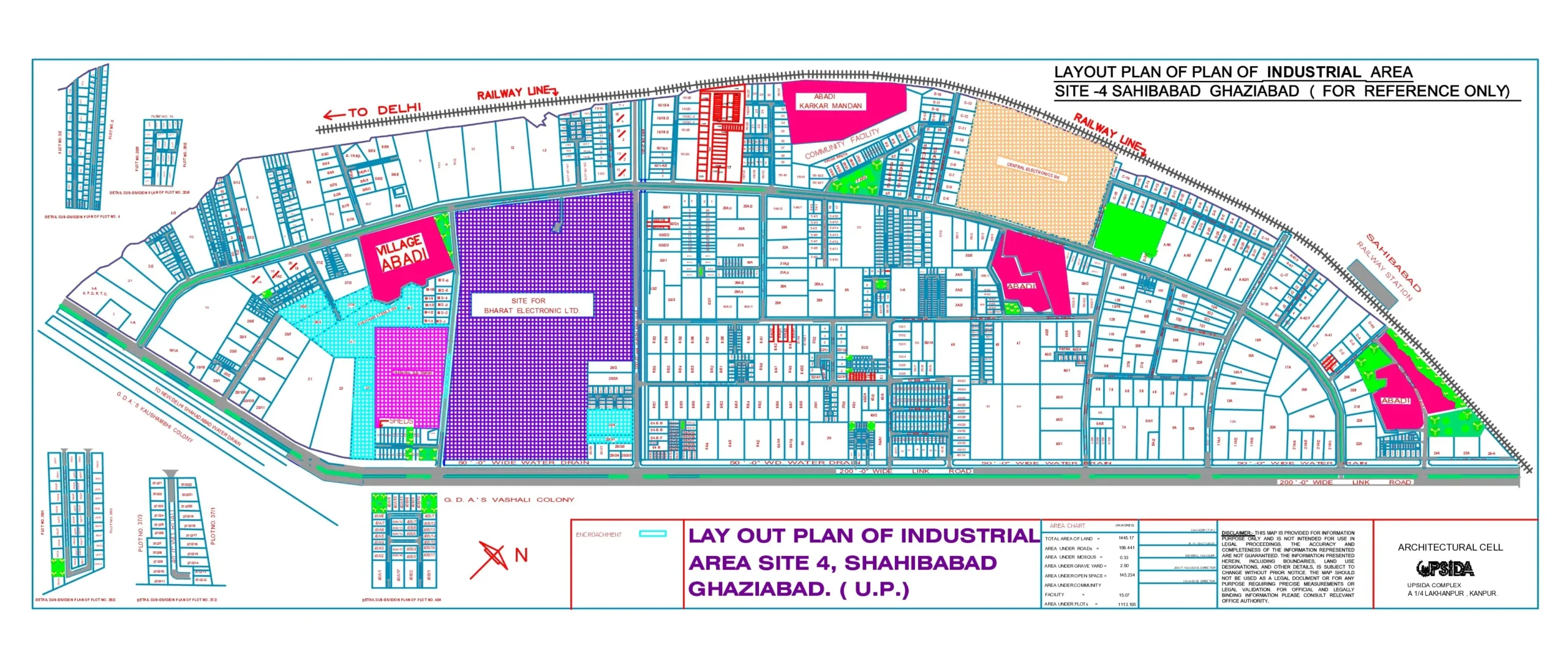
The area features a highly diverse manufacturing base, anchoring major operations in heavy engineering, steel fabrication, electronics, pharmaceuticals, and packaging. The true capital appreciation of Site 4 is driven by its exceptional transit geometry. It offers immediate freight access to the Delhi-Meerut Expressway and is seamlessly integrated with the Sahibabad ISBT, the Namo Bharat (RRTS) rapid transit corridor, and key metro stations like Vaishali and Major Mohit Sharma Rajendra Nagar. This connectivity allows corporate manufacturers to execute rapid daily logistics into the Delhi consumer market without facing cross-border bottlenecks.
2. Structural Physics: Load Transfer & The RCC Monolith
The defining characteristic of modern Sahibabad factories is the utilization of upper floors for active heavy manufacturing, not just dormant storage. When you install a 1.5-ton machine on an elevated floor, it generates massive, continuous dynamic vibration. In civil engineering, this kinetic load does not stay upstairs; it transfers aggressively from the structural beam directly into the column, shooting straight down into the basement.
To absorb this immense industrial pressure, the basement infrastructure must be impenetrable. An industrial basement wall is never built using bricks. Bricks simply cannot bear that vibrating load; the mortar joints act as thousands of tiny structural failure points that will buckle under the lateral pressure of the earth and downward machine force. VaEdifice strictly mandates a 100% RCC (Reinforced Cement Concrete) Monolith. We weave a heavy-duty matrix of steel rebar, bind it within commercial wooden scaffolding, and pour the concrete as a single, unified, indestructible shield.
3. Contiguous Shore Piling: The “Neighbor” Insurance
Because Sahibabad is a mature, densely packed industrial grid, you are rarely building on an isolated island. It is highly common to excavate a deep basement right next to an older, adjacent building that does not have one. If you simply dig a deep trench, the neighbor’s unsupported soil will instantly collapse into your site, destroying their foundation in the process.
In these cases, Contiguous Shore Piling is absolutely necessary. Piling is a completely separate structural job from the RCC wall itself. It involves boring deep, continuous 1.5-foot cylindrical reinforced concrete columns into the earth, spaced every one and a half feet, which are placed directly behind where your new RCC wall will sit. For example, in our recent Sahibabad builds, we executed strict piling on two sides—the front and the back—to completely stabilize the soil, and then we dug and built the basement. While piling costs extra money, it is the ultimate structural insurance policy ensuring both your multi-crore asset and your neighbor’s building remain totally secure.
4. Superstructure & Flooring: Engineering the Top
Above the basement, the superstructure must be meticulously calibrated for heavy logistics. The top-level execution focuses heavily on the floor geometry. Standard concrete will immediately crack under the point-load of heavy forklifts, pallet jacks, and heavy stamping machines.
- VDF & Epoxy Integration: Factory floors must incorporate Vacuum Dewatered Flooring (VDF) to increase compressive strength and reduce shrinkage, paired with heavy-duty industrial Epoxy coatings to resist chemical spills and mechanical abrasion.
- Structural Framing: Based on the client’s timeline, the superstructure utilizes either high-grade RCC column-and-beam construction or advanced Pre-Engineered Building (PEB) steel frameworks to grant massive, column-free clear spans across the production floor.
5. Capital Telemetry: The 2026 Construction Cost Matrix
Corporate treasuries demand absolute transparency regarding CapEx. The baseline financial mathematics for a Sahibabad Site 4 factory are directly tied to the heavy-duty materials required to handle industrial loads.
| Construction Phase | Execution Mandate | Capital Cost |
|---|---|---|
| RCC Basement Construction | Monolithic poured concrete over heavy steel rebar mesh to resist lateral earth pressure and absorb machinery vibration. | ₹1,400 / Sq. Meter |
| Superstructure (Top Floors) | Heavy load-bearing columns, active manufacturing slabs, and high-tensile industrial flooring capable of forklift transit. | ₹1,200 / Sq. Meter |
| Contiguous Shore Piling | Deep 1.5-foot cylindrical columns bored behind the RCC wall for critical soil stabilization during deep excavation. | Site-Specific Premium |
6. The Bureaucratic Shield: Clearances & Title Supremacy
Sahibabad is an established corridor. Consequently, secondary market plots can suffer from legacy encumbrances, unresolved UPSIDA transfer fees, or title disputes. Fiduciary capital cannot afford to get trapped in litigation. VaEdifice operates as your bureaucratic shield. We bypass the friction by delivering 100% legal title compliance and managing the entire end-to-end operational pipeline—from securing rapid map approvals and Fire NOCs to securing State Pollution Control Board (SPCB) clearances for non-polluting manufacturing units.
7. Executing the Acquisition: VaEdifice Verified Inventory
We don’t just engineer the facility; we secure the underlying sovereign asset. For elite manufacturing companies operating in Sahibabad, acquiring clean land with wide-road freight access is the true bottleneck. Below is our verified inventory of premium plot configurations currently available in Sahibabad Site 4, reflecting the architectural standard of our 28+ delivered projects.
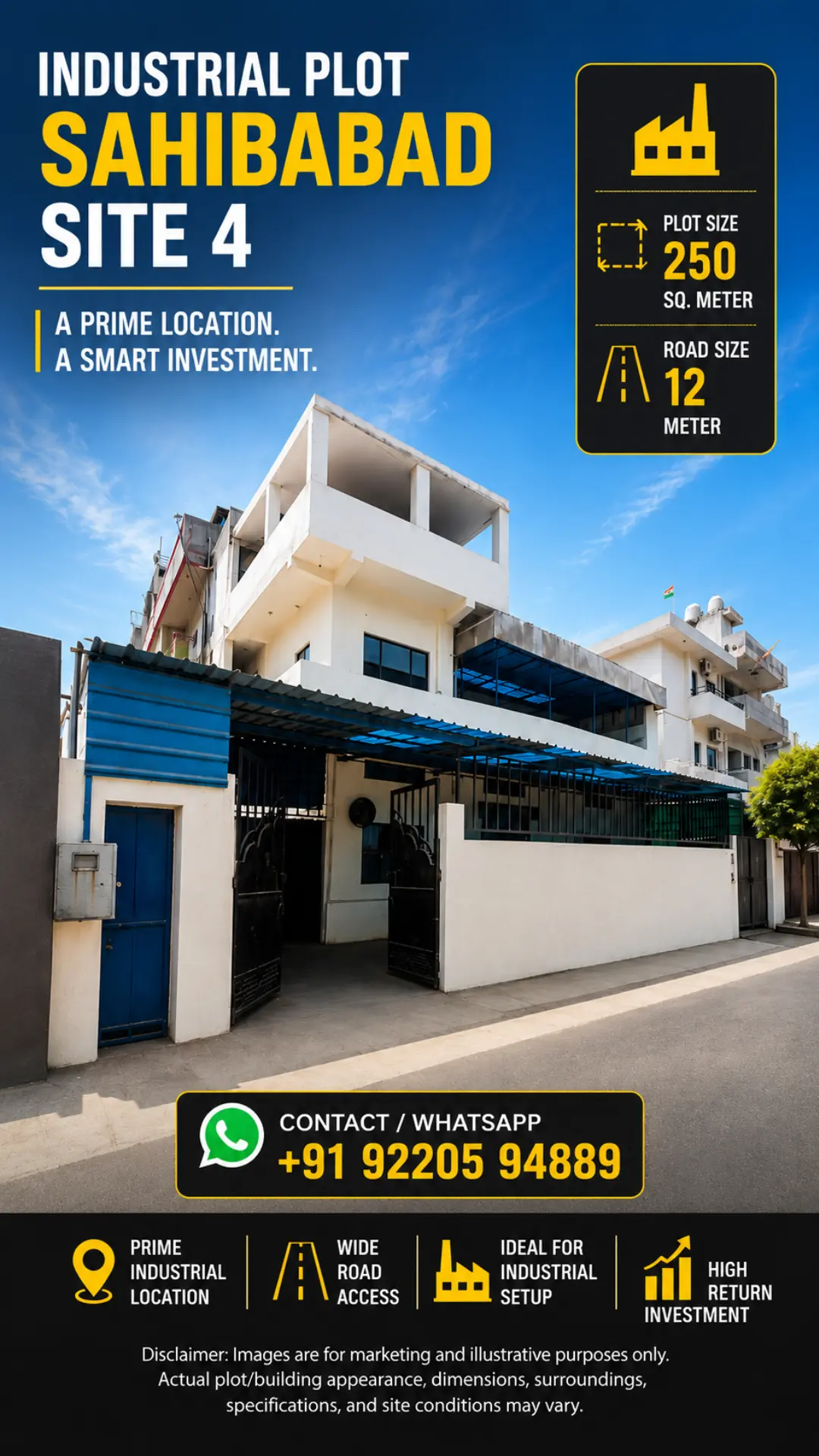
250 Sq. Meter Plot
12-Meter Wide Road Access
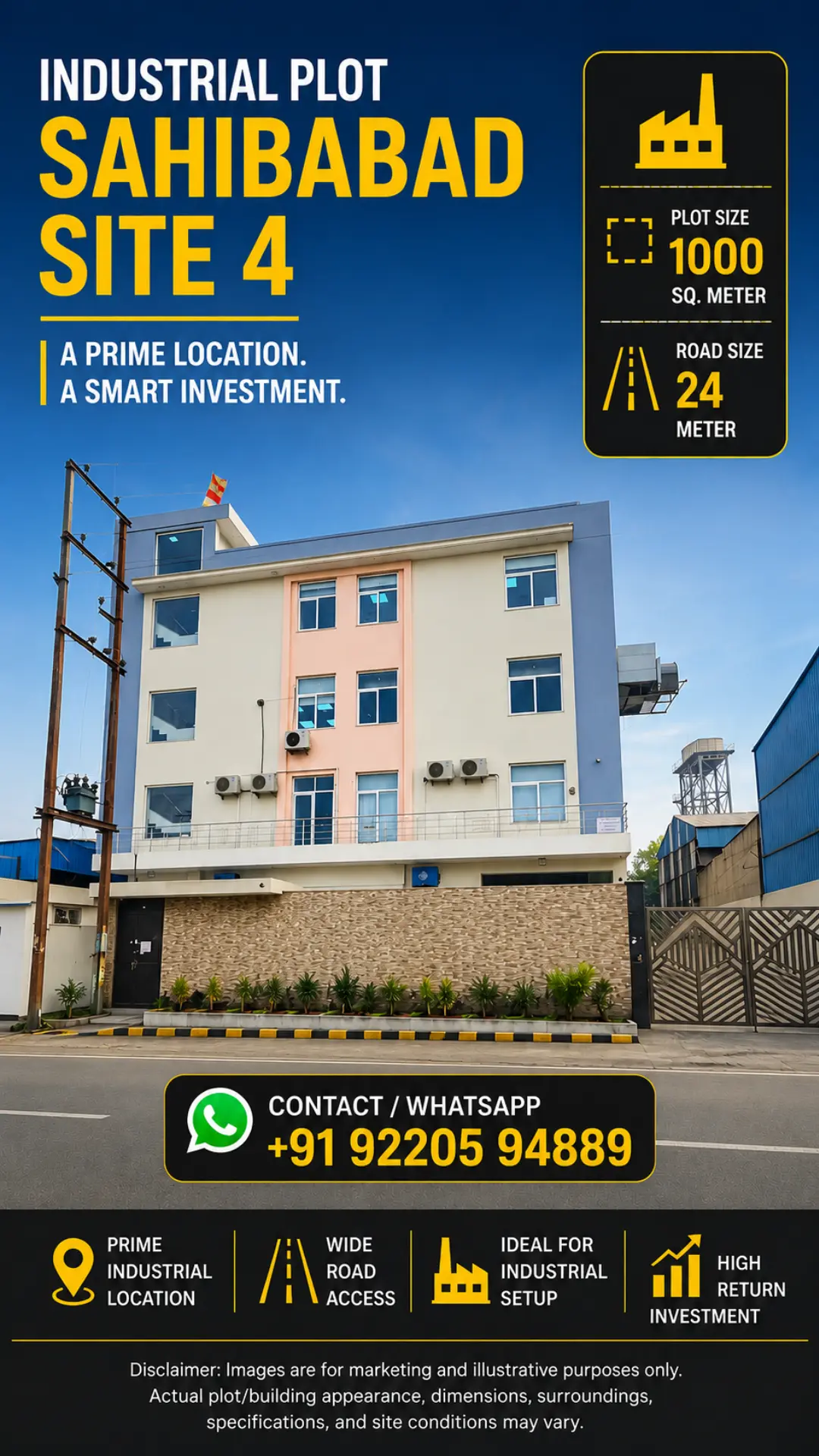
1000 Sq. Meter Plot
24-Meter Wide Heavy Logistics Access
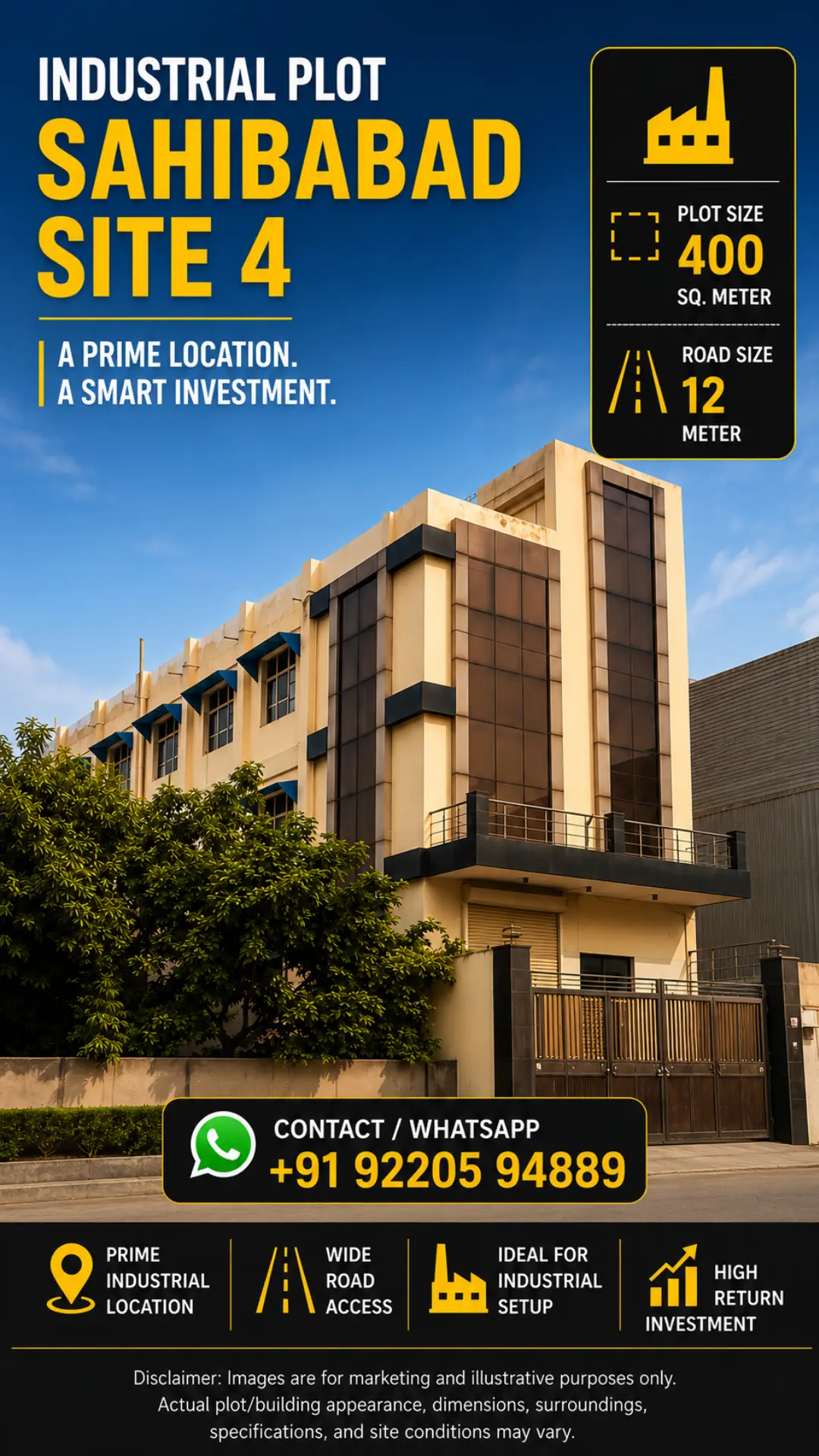
400 Sq. Meter Plot
12-Meter Wide Road Access
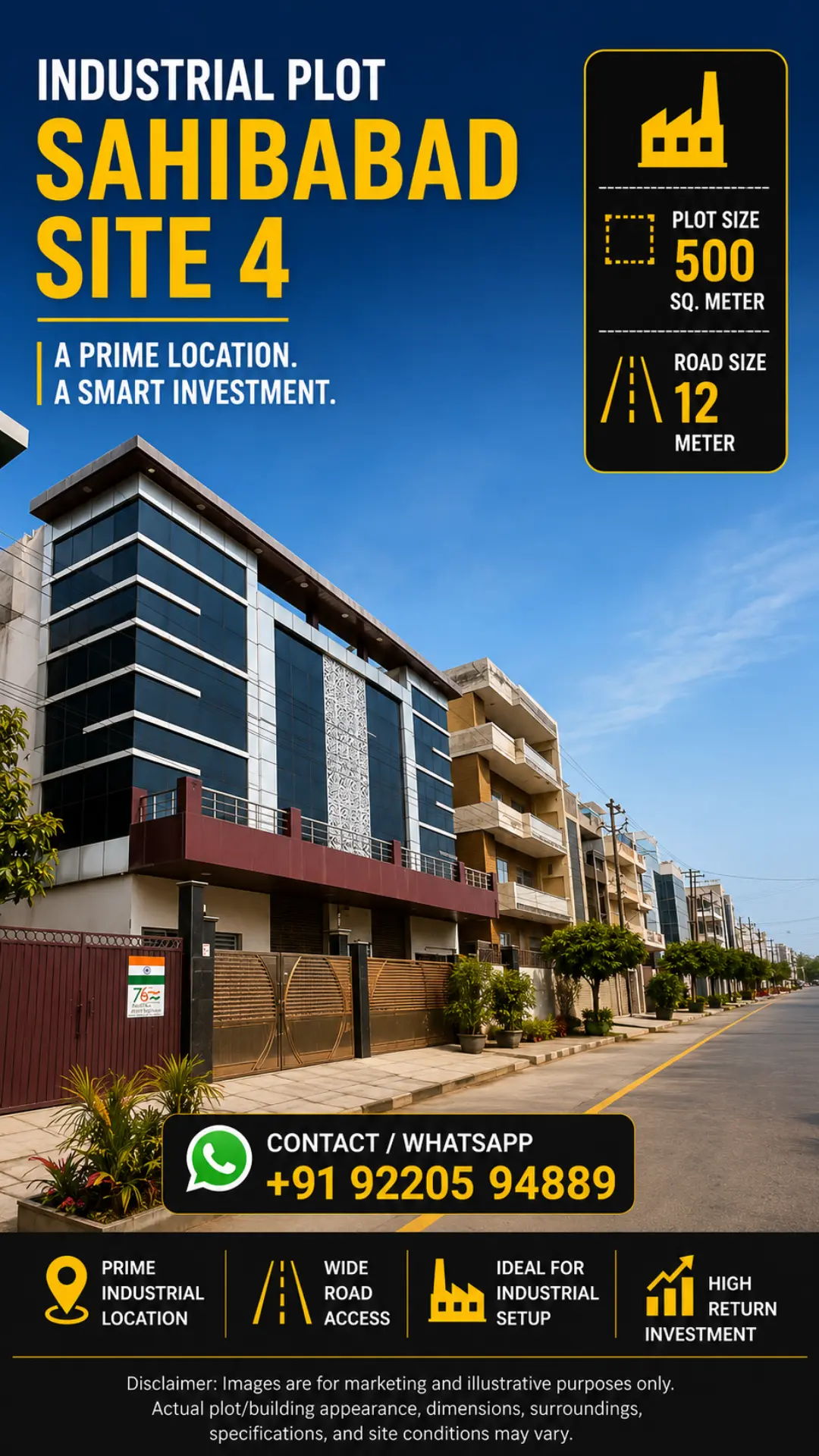
500 Sq. Meter Plot
12-Meter Wide Road Access
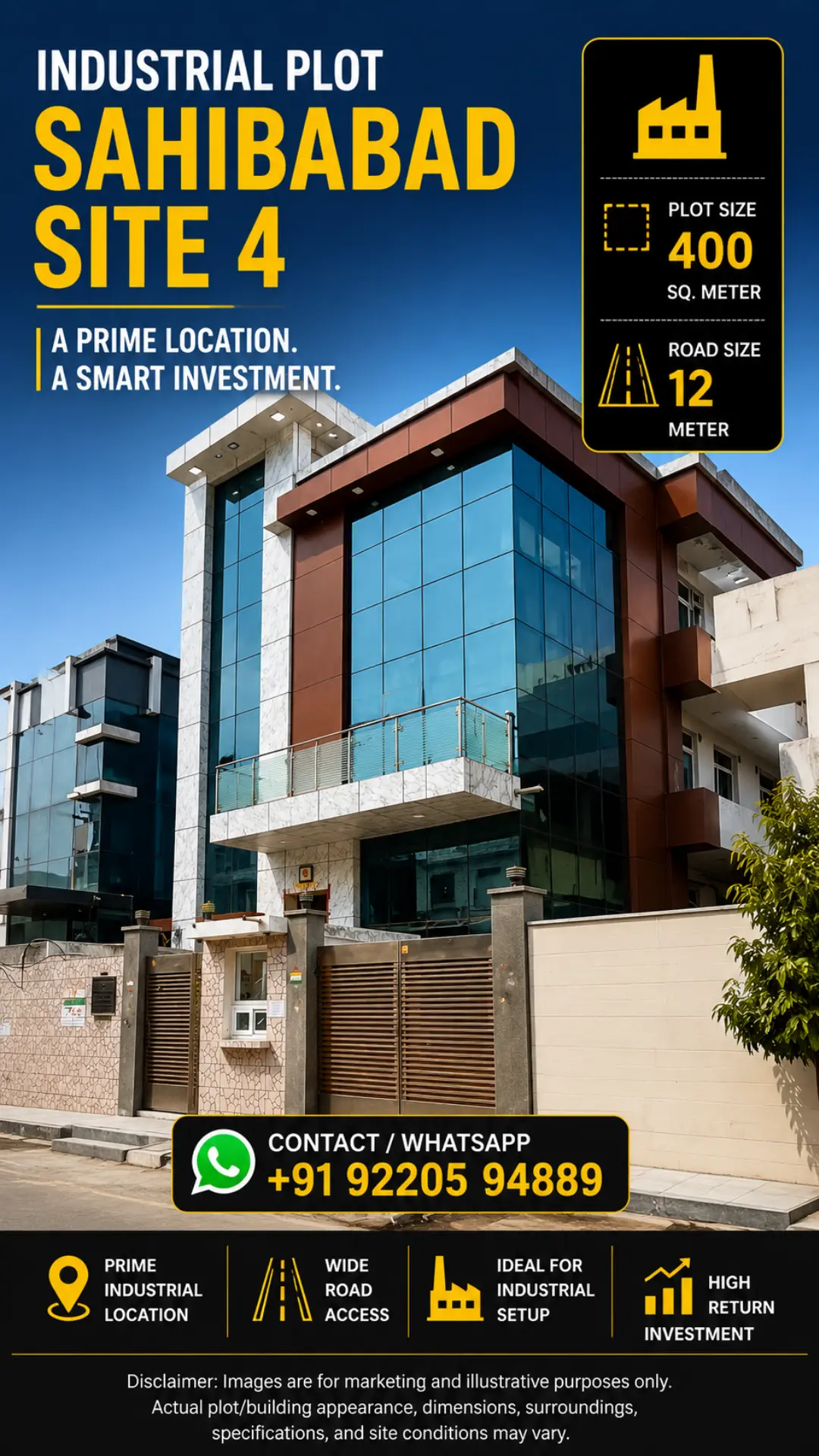
Premium 400 Sq. Meter Corner
12-Meter Wide Road Access
These prime industrial nodes offer immediate connectivity to East Delhi, Noida, and central Ghaziabad. They are meticulously zoned for heavy engineering, IT/ITES, pharmaceutical manufacturing, printing presses, and high-capacity fulfillment operations, guaranteeing aggressive capital appreciation.
Execute Your Asset Audit with VaEdifice
Industrial expansion is predicated on evaluating structural integrity and regulatory frameworks with absolute accuracy. Whether you require a full-scale RCC foundation to support high-tonnage machinery, or seek to acquire a 100% legal, UPRERA-compliant plot in Sahibabad Site 4, VaEdifice executes at the highest level of fiduciary standard. Call us directly to schedule your site inspection.
Corporate Office: A-143, Sovereign Corporate Tower, 11th Floor, Sector 136, Noida UPRERA RE Agent Reg No: UPRERAAGT26701
Disclaimer: Plot listings are subject to real-time market availability. Actual dimensions and site boundaries are verified during the site walkthrough.