

A ₹35,000 to ₹40,000 Crore capital expenditure is permanently severing Delhi’s monopoly on North Indian freight logistics. Rather than forcing commercial fleets through the congested National Capital Region, the National Highways Authority of India (NHAI) is engineering a massive 742-kilometer greenfield corridor that aggregates multi-state trade at Shamli and funnels it directly south via the Delhi-Dehradun axis. This precise routing physics designates Baghpat as the terminal bottleneck for final-mile distribution, creating a micro-market where institutional capital is currently acquiring sovereign freehold land to capture projected 50% to 60% near-term yields.
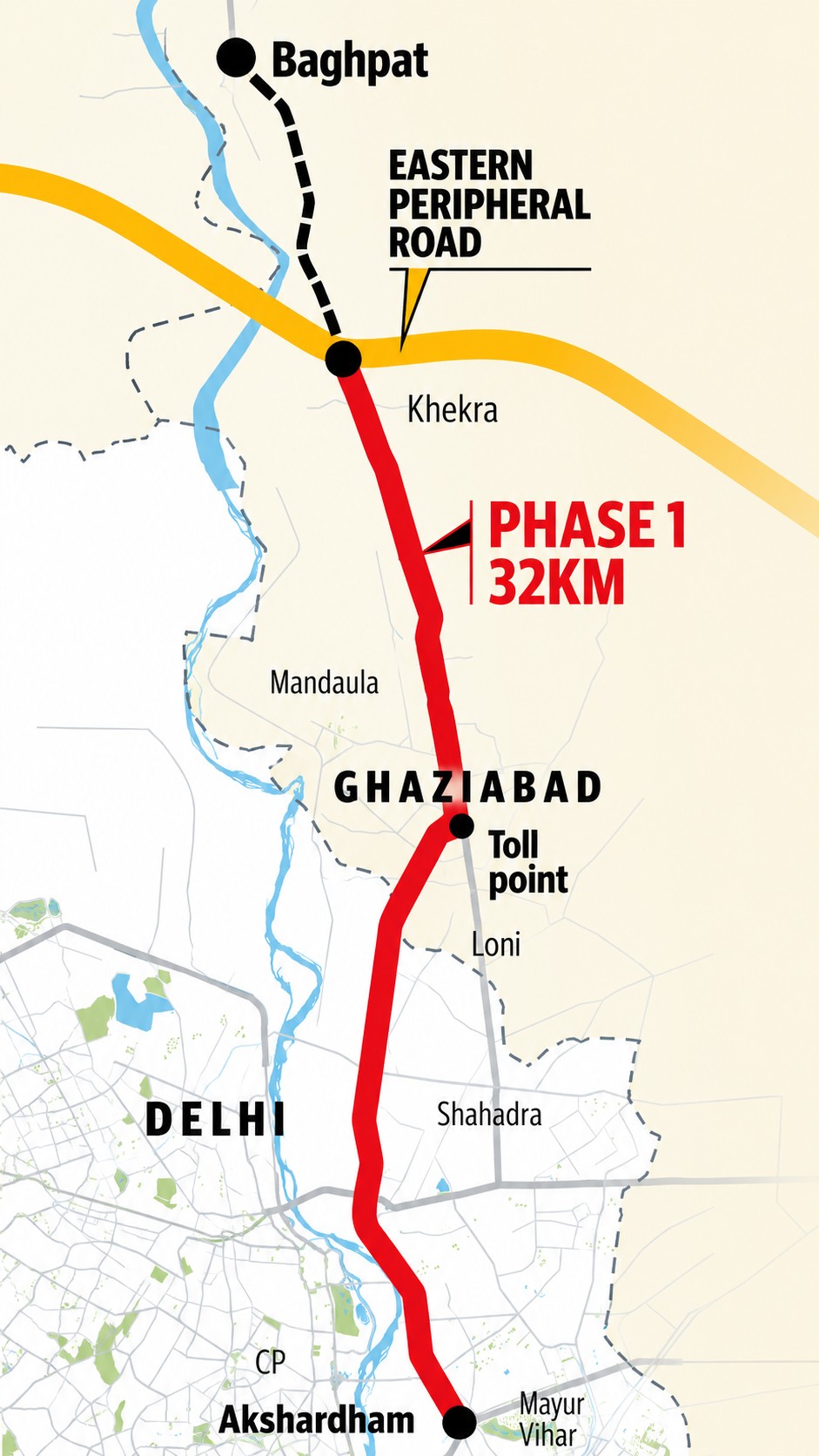
Elite corporate treasuries are already executing on this telemetry. Heavy engineering conglomerates have deployed ₹100 Crore manufacturing installations exactly 7.3 kilometers from Baghpat’s Eastern Peripheral Expressway (EPE) toll plaza to exploit this frictionless transit. With the state government actively enforcing a Section 3A land freeze across the primary corridor to neutralize retail speculation, fiduciary capital is moving aggressively. Institutional property funds are securing unencumbered commercial blocks in Baghpat today, positioning themselves to dictate exit liquidity terms before incoming national logistics providers strip the remaining supply.
Executive Summary: The Northern Logistics Reconfiguration
National infrastructure development across northern India has graduated from localized highway expansions into a highly coordinated, multi-state logistics network. The exact epicenter of this shift is Shamli, where the newly inaugurated Delhi-Dehradun Expressway physically intersects with the Ambala-Shamli Expressway and the massive ₹40,000 Crore Shamli-Gorakhpur Greenfield Expressway. This strategic tri-axis connectivity platform bypasses the congested transit routes of the NCR, permanently designating Baghpat as the prime manufacturing and final-mile logistics checkpoint for the Delhi consumer market.
1. The Geographic Moat: Why Shamli is the Apex Node
To evaluate why Shamli was selected as the absolute origin point for a multi-thousand-crore corridor, one must study the geographic bottlenecks of North Indian supply chains. Shamli sits at a highly strategic geographic pinch-point. Bounded to the west by the natural physical border of the Yamuna River, it separates Uttar Pradesh from Haryana. Because of its exact coordinates, it acts as the single gateway where four major economic zones converge: Punjab, Haryana, Uttarakhand, and Eastern UP.
The engineering logic initiated by the state is strictly utilitarian. Instead of routing heavy national freight through the heavily congested borders of Delhi, such as the NH-44 Panipat/Sonipat route, the NHAI is turning Shamli into a massive bypass hub. All national freight is designed to aggregate in Shamli before being surgically routed to its final distribution points.
2. The Core Infrastructure Asset: Shamli-Gorakhpur Greenfield Expressway
The primary economic engine of this convergence is the Shamli-Gorakhpur Expressway. It acts as the horizontal spine for the state, stitching the extreme western and eastern borders together into a single, high-speed logistics network.
Engineering Specifications & Capital Telemetry
- Linear Scale: The expressway spans a total mapped distance of 742 kilometers, making it a massive greenfield mega-project.
- Capital Expenditure (CapEx): Total institutional budget allocation is estimated at ₹35,000 Crore, with projections expanding to ₹40,000 Crore to account for structural expansions and raw land acquisition.
- Lane Architecture & ROW: The corridor is constructed as a 6-lane thoroughfare, engineered with an expansive 150-meter Right of Way (ROW). This footprint seamlessly accommodates future expansion to 8 lanes, military emergency airstrips, and integrated logistics parks without disrupting active traffic.
- Transit Compression: Designed for an operating speed of 120 km/h, the highway cuts the cross-state transit time from 15 hours down to a mere 8 hours.
- Civil Engineering Benchmarks: A major structural component includes the construction of a 2,750-meter-long bridge crossing the Ganga River, directly linking the Bijnor district with Muzaffarnagar near Ramjiwala village.
The Route Matrix and District Penetration
The expressway follows a highly calculated path that slices through 22 distinct districts and 37 tehsils across Uttar Pradesh. It originates near Gogwan Jalalpur in Shamli, adjacent to the Haryana border, and terminates near Kushinagar, close to the Bihar border.
Shamli (Origin Point) → Muzaffarnagar → Saharanpur → Bijnor → Amroha → Moradabad → Rampur → Bareilly → Pilibhit → Shahjahanpur → Badaun → Sambhal → Hardoi → Sitapur → Lakhimpur Kheri → Bahraich → Shrawasti → Balrampur → Siddharthnagar → Sant Kabir Nagar → Gorakhpur (Terminal Point) → Kushinagar (Bihar Border Link).
By routing directly through these specific industrial and agricultural manufacturing zones, the highway compresses a cross-state journey that previously required over a dozen hours into a highly predictable, single-shift transit window.
3. The Tri-Axis Intersection Matrix
To evaluate the true value of Shamli as a transit interchange, one must map the three massive infrastructure arteries converging directly over it.
| Expressway Asset | Linear Scale & Status | Strategic Logistics Function |
|---|---|---|
| Ambala-Shamli Expressway | 121.7 km access-controlled 6-lane greenfield expressway. Targeted for late 2026 completion. | Originating at Sadopur (Ambala), it directly plugs Punjab and Haryana’s massive industrial and agricultural output straight into Shamli, completely bypassing the heavily congested NH-44 route. |
| Shamli-Gorakhpur Expressway | 742 km greenfield mega-project currently undergoing rapid land acquisition. | Stitches Western and Eastern UP together, turning Shamli into the primary loading dock for eastern distribution. |
| Delhi-Dehradun Expressway | 210-km corridor connecting Akshardham directly to Dehradun. Inaugurated April 2026. | Slices transit time from 6 hours to 2.5 hours. Both the Ambala-Shamli and Shamli-Gorakhpur expressways physically intersect with this corridor at Gogwan Jalalpur in Shamli. |
This intersection means that heavy manufacturing cargo moving from Chandigarh, Ludhiana, or Amritsar no longer has to queue at local state border checkposts. It enters an access-controlled loop that merges flawlessly with eastern freight at Shamli, creating a state-of-the-art national transit platform.
4. Supply Chain Physics: Diverting the Industrial Flow to Baghpat
For a fiduciary investor, analyzing the Shamli intersection is only the preliminary step. The critical question remains: How does a multi-thousand-crore development in Shamli directly drive capital appreciation in Baghpat? The answer is defined by the physics of supply chain funnels.
While Shamli serves as the grand collection and sorting interchange for cross-country commercial freight, heavy freight carriers originating from the Punjab industrial belt via the Ambala line, or from the eastern manufacturing zones via the Gorakhpur line, converge at Shamli with a primary economic objective: to discharge their goods into the massive consumer base of the National Capital Region.
To accomplish this, that massive volume of commercial vehicles must travel directly South along the access-controlled Delhi-Dehradun Expressway. Baghpat sits directly in the throat of that exact funnel. It is the final horizontal crossroad, bounded by the Eastern Peripheral Expressway (EPE), before the transit stream crosses into the Delhi metropolitan border.
Logistics operators and industrial manufacturers do not build their primary distribution or heavy casting facilities at the sorting junction itself; they position them at the terminal entry gate to minimize final-mile delivery windows. This geographic reality designates Baghpat as the prime beneficiary of the entire northern corridor realignment. It is the tactical zone where freight is staged, processed, and injected into the EPE loop to service Greater Noida, Ghaziabad, or Faridabad without entering the municipal restriction zones of inner New Delhi.
5. Regulatory Telemetry: Tracking Ground Reality and the Section 3A Freeze
Institutional analysis requires tracking legal execution on the ground. As of mid-2026, the Shamli-Gorakhpur corridor has entered a strict regulatory lockdown. The state government has enacted Section 3A of the National Highways Act, officially declaring the land-marking phase.
This legislation initiates an absolute legal freeze, banning the sale, purchase, or conversion of designated agricultural land along the route to actively prevent retail speculation. The mandated deadline for finalizing this land freeze across all 22 districts is set for August 2026.
Concurrently, joint NHAI engineering and state revenue teams are operating directly in the field. Officers are actively placing cemented boundary poles in agricultural sectors, a process notably active right now in the Bijnor district across villages like Nichalpur and Milak.
The market response to this legislation is calculated. Corporate treasuries and institutional funds have shifted focus away from the frozen designated path. Instead, they are aggressively inquiring about sovereign land parcels situated immediately outside the expressway boundaries, particularly near proposed interchanges in Bareilly, Bijnor, and Amroha, aiming to establish future 3PL warehousing and industrial hubs.
6. Empirical Corporate Validation: The Goyal Precision Components Asset
To establish fiduciary trust, an investment thesis must point to empirical proof of deployment. Retail participants wait for consumer megabrands to announce a plant before believing a market is viable. However, multi-billion dollar conglomerates have the treasury weight to absorb sub-optimal logistics if necessary. The ultimate validation of an industrial cluster comes when highly specialized, capital-disciplined heavy engineering firms deploy significant private capital into the zone.
This validation is explicitly demonstrated by the facility operated by Goyal Precision Components (Goyal Inc.) in the Baghpat industrial sector. This is a heavy-duty, high-precision contract manufacturing firm operating at massive scale.
Operational Analytics of the Katha Setup
- Capital Execution: The installation represents a calculated capital injection estimated between ₹90 Crore and ₹100 Crore, allocated specifically for high-specification heavy machinery.
- Asset Coordinates: The manufacturing plant sits on Khasra (Kh) numbers 1883, 1884, and 1885 located within Village Katha, District Baghpat.
- Industrial Footprint: The facility houses a high-pressure die-casting setup with operational capacities scaling from a baseline of 120 tons up to a massive 1,500-ton capacity machinery matrix.
- Logistics Mandate: Operating 1,500-ton casting equipment requires an immense influx of raw materials, an uninterrupted power grid, heavy load-bearing structural floors, and immediate highway access for heavy freight trucks.
Institutional Validation: Proving the Fiduciary Thesis
The operational viability of this corridor is heavily anchored by multi-million-crore corporate land acquisitions. Major players are expanding here because the infrastructure supports massive utility demands, including Amul (Banas Dairy) with its ₹800 Crore greenfield dairy plant, Grupo Bimbo (Harvest Gold) with its ₹550 Crore integrated rapid-distribution bakery hub, and Goyal Precision Components (Goyal Inc.) with its ₹100 Crore heavy engineering facility.
This established industrial cluster is specifically zoned and optimized for a diverse range of non-polluting factories, manufacturing units, and advanced corporate setups. Investors can establish highly efficient operations here, including Grade-A third-party logistics (3PL) fulfillment centers, fast-moving consumer goods (FMCG) processing units, auto-ancillary assembly plants, agro-processing facilities, pharmaceutical packaging hubs, and light precision engineering workshops.
The interconnected expressway matrix completely alters transit physics for these industries, allowing cargo to bypass inner Delhi traffic restrictions entirely. Fleet vehicles can load manufactured products and route seamlessly to industrial markets across Haryana, Rajasthan, or Greater Noida in highly predictable single-shift transit windows.
7. Institutional Forecast: The 2026–2030 Real Estate Matrix
The long-term valuation of an infrastructure corridor is determined entirely by the economic activity flowing through it. The integration of the Shamli-Baghpat axis drives a fundamental re-rating of land classes in the region. The underlying land along this corridor is actively transitioning from an agricultural holding baseline to Grade-A 3PL (Third-Party Logistics) Warehousing valuations.
Current market telemetry indicates the baseline average rate for standard freehold industrial and commercial plots in the Baghpat micro-market currently ranges between ₹30,000 to ₹40,000 per Square Yard. And the plot sizes available here range from 300 to 2,500 Square Yards. This represents the foundational entry cost for general manufacturing and logistics operators. However, premium, large-scale commercial parcels featuring direct highway frontage—which command maximum visibility and unrestricted heavy freight access—naturally secure a higher capital valuation.
As the Ambala-Shamli link finalizes in late 2026, the demand for heavy truck staging areas, temperature-controlled cold chains, and primary distribution centers will systematically strip the remaining freehold land supply in Baghpat. Utilizing institutional acquisition metrics, forward models project a 50% to 60% capital appreciation on sovereign freehold plots within Baghpat’s commercial and industrial sectors over the next 12 to 18 months, aligning with the operational maturity of the expressway intersections.
By 2028-2029, when the 742-km Shamli-Gorakhpur corridor begins active utilization, the secondary market will solidify. Early institutional capital that secured 1,500 to 4,000 sq. yard modular plots in Baghpat today will dictate the exit liquidity terms to the incoming wave of national logistics and FMCG conglomerates.
8. Strategic Portfolio Allocation: The Ready Commercial Land Block
To translate this macroeconomic infrastructure data into an executable wealth-preservation strategy, an investor must target specific, due-diligence cleared land parcels that capture the direct physical flow of the corridor. Following the core philosophy of prioritizing analytical signal over marketing ceremony, VaEdifice presents the structural parameters of our prime commercial land holding along this direct axis.
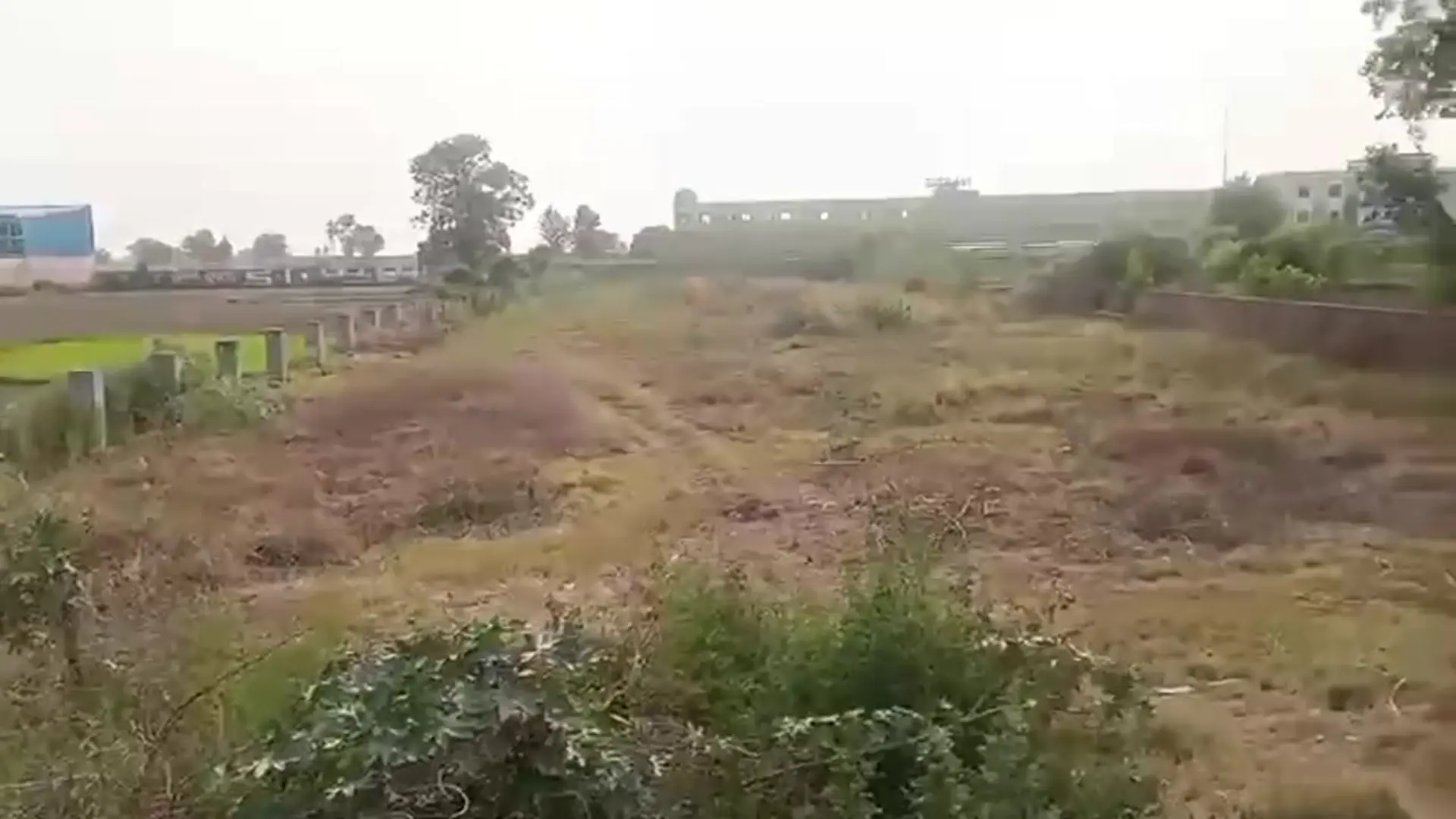
Property: 4,000 Sq. Yards Commercial Land

Delhi–Dehradun Expressway
This 4,000 Square Yard commercial land block provides immediate infrastructure utility. Unlike leasehold plots that carry multi-decade administrative restrictions, this is an unencumbered sovereign freehold asset class. It allows corporate buyers and private family offices to establish operational logistics early, capturing high yields before institutional demand systematically outstrips the available land supply. For direct acquisition inquiries and technical site telemetry, contact VaEdifice at +91 92205 94889.
Execute Your Asset Audit with VaEdifice
The mathematics of the North Indian logistics reconfiguration are absolute: you either own the bottleneck, or your portfolio pays rent to the entities that do. At VaEdifice, we analyze real estate exclusively through hard engineering data, regulatory telemetry, and supply chain physics. We provide corporate treasuries and family offices with transparent access to high-yield industrial acquisitions and premium freehold land banks across the NCR.