
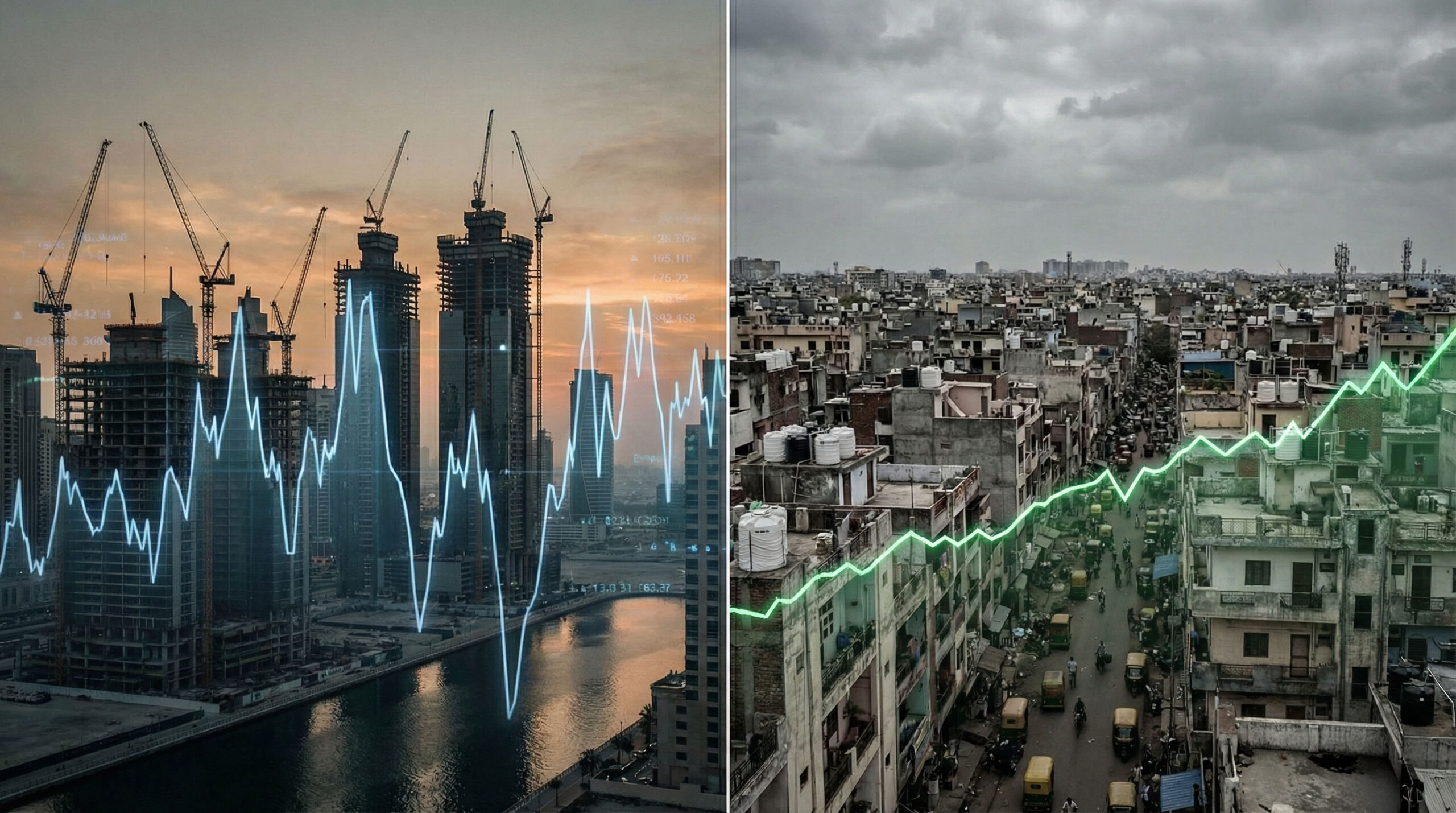
Dubai’s skyline tells a powerful story: ambition, speed, and scale. For Indian investors, it has become the most discussed overseas property destination — marketed as tax-efficient, globally connected, and high yielding.
But beneath the glamour lies a fundamental truth that many overlook.
Dubai’s real estate market moves fast.
India’s real estate market lasts long.
Understanding this difference is critical before comparing returns.
A Market Built on Cycles vs One Built on Demographics
Dubai’s property market is deeply cyclical. It thrives during global liquidity booms and slows sharply when international sentiment turns risk-averse. History shows that when capital flows retreat, prices correct — often swiftly and sharply.
India, on the other hand, is driven less by global capital and more by domestic necessity. Urbanisation, employment migration, and household formation create a demand base that does not disappear during downturns. Prices may pause, but they rarely collapse.
This makes Indian real estate structurally resilient, even if it lacks Dubai’s speed.
The Oversupply Question Nobody Talks About
Dubai can add supply faster than almost any global city. Mega-projects come online quickly, often driven by investor optimism rather than end-user need. When supply outpaces demand, rents soften and resale prices stagnate.
Indian cities face the opposite problem. Land scarcity, regulatory approvals, and infrastructure constraints limit reckless expansion. Supply shortages — especially in affordable and mid-income housing — remain chronic.
Scarcity protects value. Abundance pressures it.
Investor Market vs Shelter Market
Dubai’s buyers are largely investors and expatriates. This makes the market efficient, but also sensitive. When investors exit, prices respond immediately.
India’s buyers are families. Homes are bought to live in, not flip. This emotional and functional attachment reduces panic selling and stabilises prices during stress.
Markets driven by shelter behave very differently from markets driven by speculation.
Returns vs Risk: The Trade-Off
Dubai offers bursts of high returns — but demands precise timing. Entry and exit decisions matter more than location alone.
India offers slower appreciation — but rewards patience. Long holding periods, infrastructure development, and demographic tailwinds work quietly in the background.
One market rewards traders.
The other rewards holders.
What Indian Buyers Should Really Understand
Dubai is not a bad market.
India is not a slow one.
They simply serve different purposes.
Dubai works well for:
-
Globally diversified investors
-
Short-to-medium-term strategies
-
Those comfortable with volatility
India works best for:
-
Long-term wealth creation
-
End-use buyers
-
Capital preservation
Confusing one for the other leads to disappointment.
Conclusion: Speed Is Not Strength
Dubai’s real estate shines during global upswings, but its dependence on external capital makes it fragile during downturns.
India’s real estate may move slower, but it is anchored in population, necessity, and long-term demand.
For Indian investors, the real question is not which market grows faster — but which one holds stronger when cycles turn.
And history suggests that resilience, not speed, is what builds lasting wealth.