
Is YEIDA: India’s Most Overpromised City ?
The Yamuna Expressway Industrial Development Authority (YEIDA) was envisioned as a futuristic satellite city near Noida, built around the upcoming Jewar (Noida International) Airport. Its masterplans promised world-class infrastructure — housing, schools, hospitals, malls, and tech parks — all expected to rise in sync with the airport.
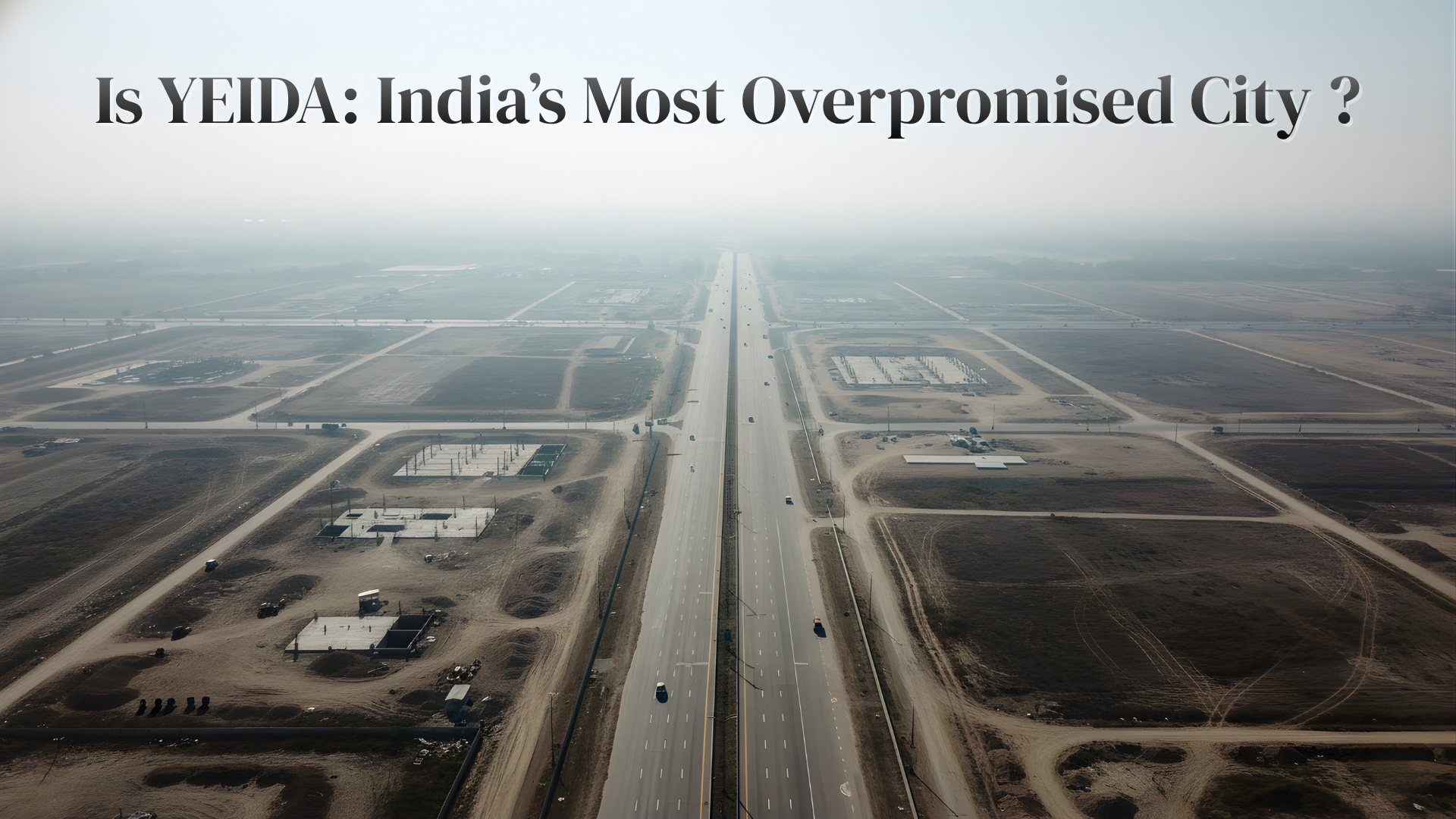
But on the ground, the reality is starkly different. Older YEIDA sectors resemble “ghost towns”: wide roads, empty plots, and barely any civic life. Even as the airport nears completion, most residential sectors remain uninhabited, lacking basic utilities like power, water, and drainage. Families and businesses have yet to move in, despite YEIDA’s decade-old promise of self-sufficient townships.
On the Ground: Ghost Towns and Empty Streets
YEIDA’s early housing schemes, launched over a decade ago, remain largely unoccupied. Many allottees who purchased plots in 2009–2012 have yet to see basic amenities. Residents report that schools, markets, and hospitals are still absent, while roads and streetlights remain incomplete.
Roughly 30,000 residential plots have been allotted since 2009, but fewer than half have seen registration or construction. Most of the built structures are “compliance shells” — minimal boundary walls or empty boxes, made only to avoid penalties rather than for living. Streets remain quiet, and parks or shopping complexes exist only on paper.
The same picture extends to the industrial zones. The much-publicized Medical Device Park in Sector 28 — spread across 350 acres — has only a handful of factories under construction despite dozens of allotted plots. Similarly, several “flatted factory” projects and industrial estates remain in preliminary stages. On the ground, construction activity exists, but operational businesses are few.
Promises vs. Reality: Major Projects
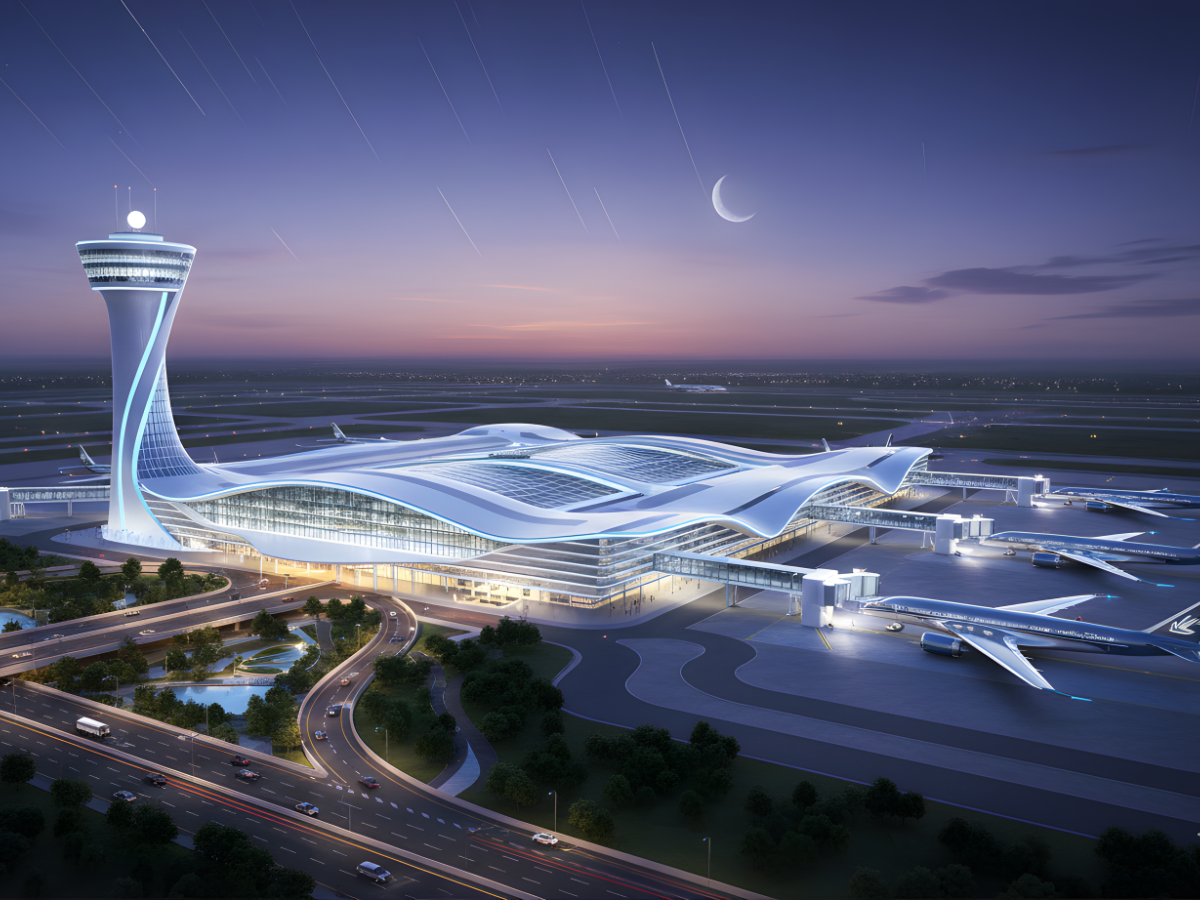
YEIDA’s brochures list multiple flagship developments — most still far from complete:
-
Noida International Airport (Jewar): The first phase is nearing completion, with commercial operations expected around late 2025. It will likely be India’s largest airport once fully operational, but it’s already nearly a decade behind initial timelines.
-
International Film City (Sector 21): Spanning over 1,000 acres, construction has only just begun with an initial 230-acre Phase I expected to take 18 months. Full completion is still several years away.
-
Medical Device Park (Sector 28): Work on laboratories and flatted factories has recently started, but most industrial plots remain vacant. The park is expected to take another two to three years before significant occupancy.
-
Data Centre and IT Park: About 50 acres in Sector 28 have been earmarked for high-tech data centers, but visible construction is minimal. Supporting infrastructure like a new substation is under construction and expected by 2026.
-
Logistics Parks and Flatted Factories: Multiple projects have been announced for apparel, toy, and electronics manufacturing — yet most remain in early planning or tendering stages.
-
Urban Transit and Heritage Projects: Ambitious ideas such as the Heritage City and Pod Taxi system remain only conceptual, with no ground activity.
In short, nearly every flagship project is still years away from completion. The airport may soon open, and factories will eventually rise — but the supporting civic framework of schools, markets, and healthcare trails far behind.
What It Means for Investors and Residents
For investors and homebuyers, YEIDA remains a waiting game. Thousands entered early expecting rapid urbanization, but most have seen little return beyond paper appreciation. Initial plot schemes attracted record participation — some with over 200,000 applications — but subsequent draws have seen declining enthusiasm as ground realities became evident.
The lesson is clear: a planned city is not a built city.
Utilities like electricity, sewage, and water arrive years after allotment. Schools, shops, and hospitals follow only when a population base exists. Many houses stand empty, constructed only to fulfill regulatory norms rather than to live in.
For those eyeing plots near Jewar Airport, perspective is essential. While the airport’s opening will certainly raise YEIDA’s visibility, “investment ready” does not mean “habitation ready.” Infrastructure, population density, and commercial activity take time — often decades — to mature.
Outlook: A Distant Horizon
Officials remain optimistic. Land acquisition issues have been largely resolved, and YEIDA claims that over 80% of planned land parcels are now under its control. The authority aims to complete essential infrastructure in time for the airport’s operational phase, hoping this will attract industries and residents alike.
But the long record of delays tempers that optimism. A city cannot thrive on blueprints alone. Development depends on functional ecosystems — schools, hospitals, markets, and jobs — not just announcements.
YEIDA may eventually become the thriving satellite city its planners envisioned. But the pace will be slow, and the horizon distant.
For now, YEIDA remains more of a promise than a place.
Looking beyond the hype?
At VaEdifice, we focus on ground realities — not promises.
Get verified updates on industrial and residential developments across NCR.